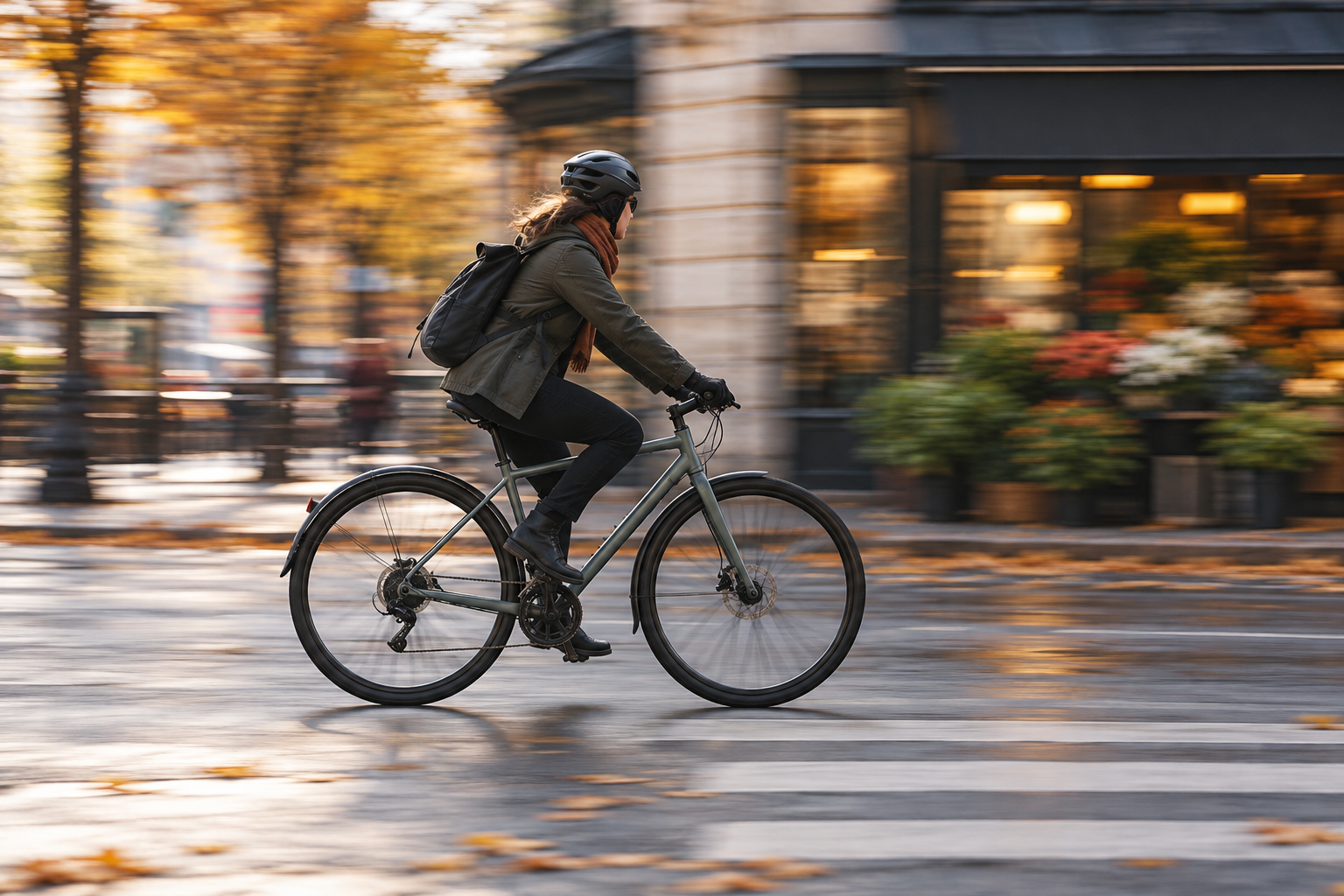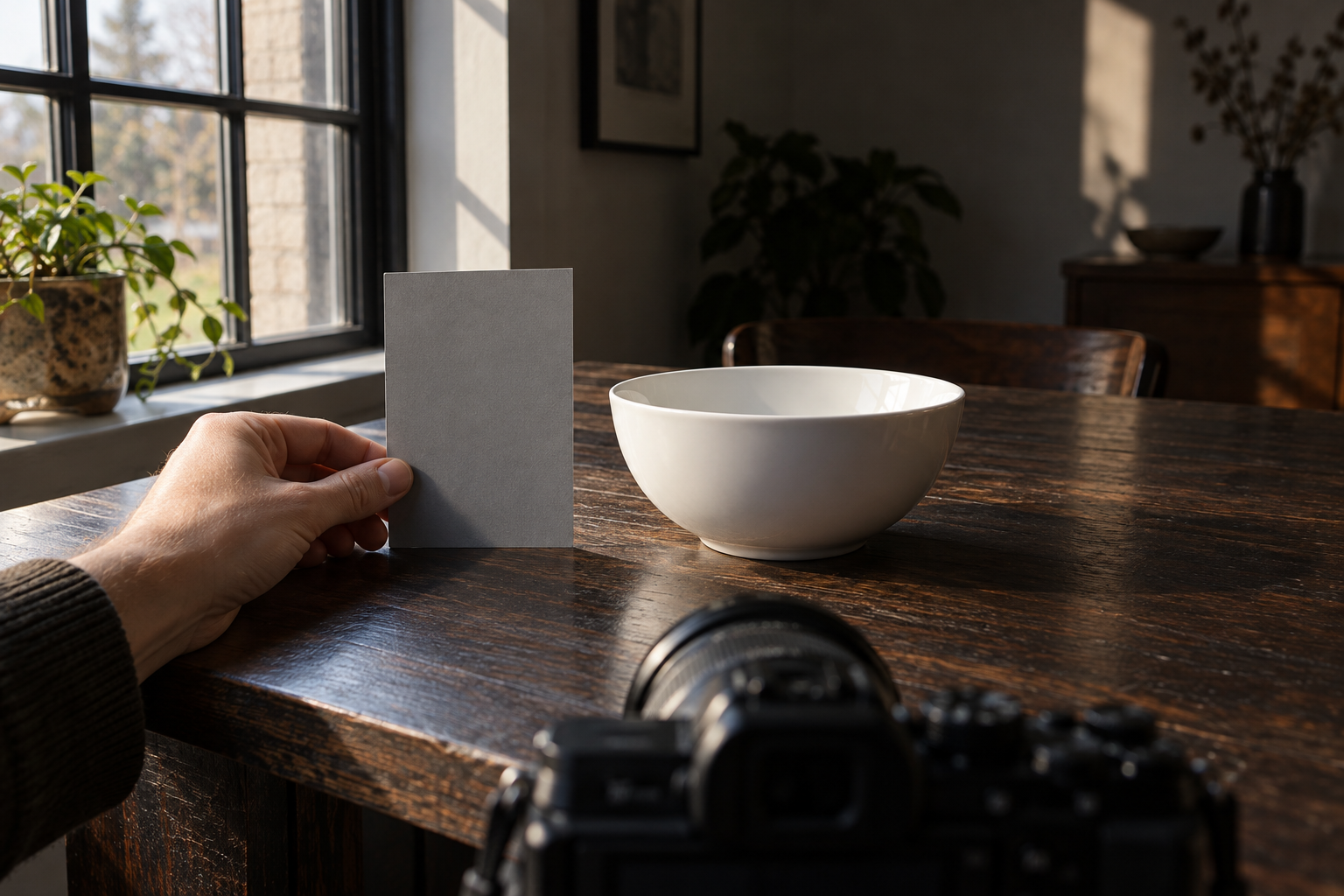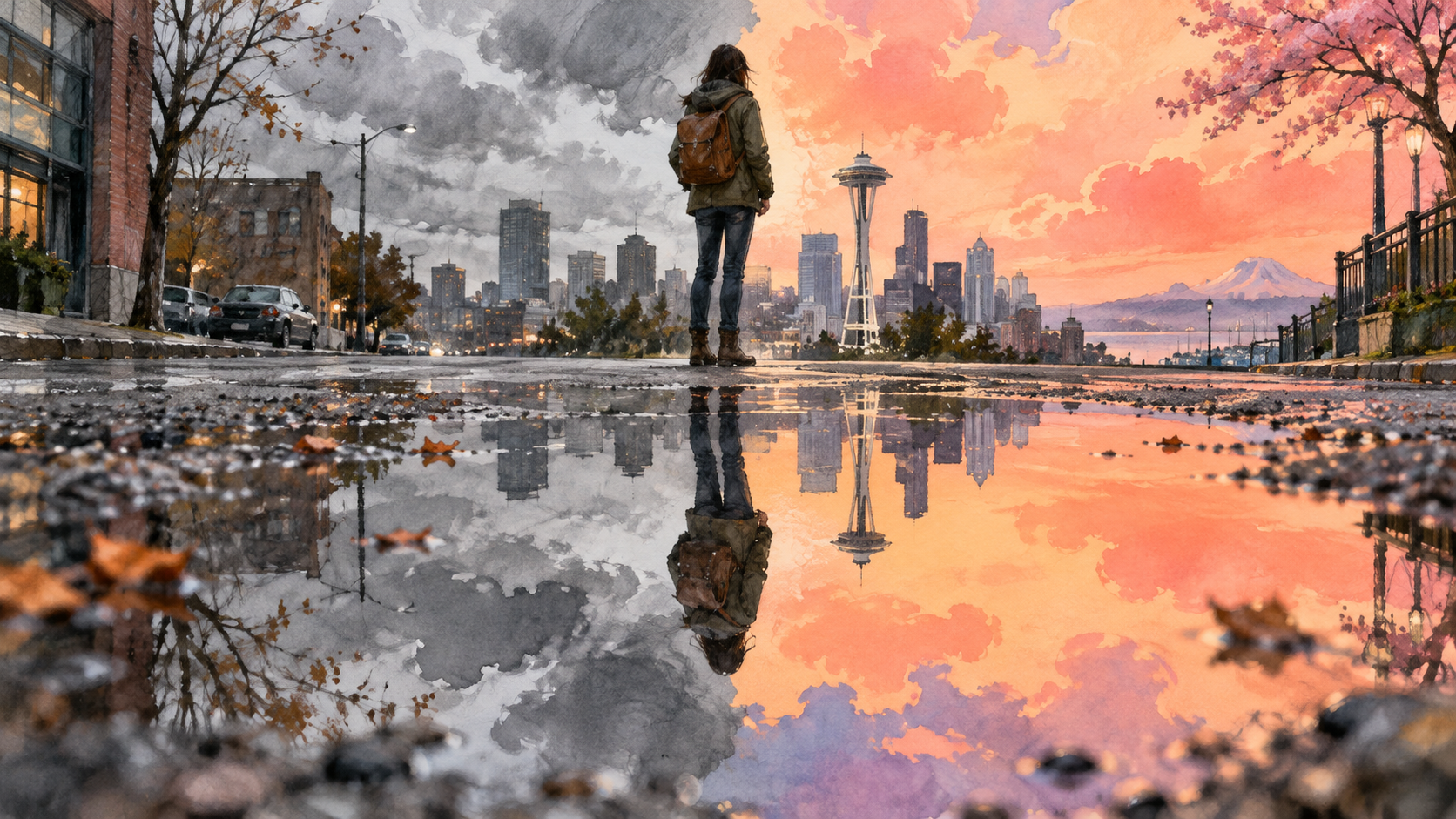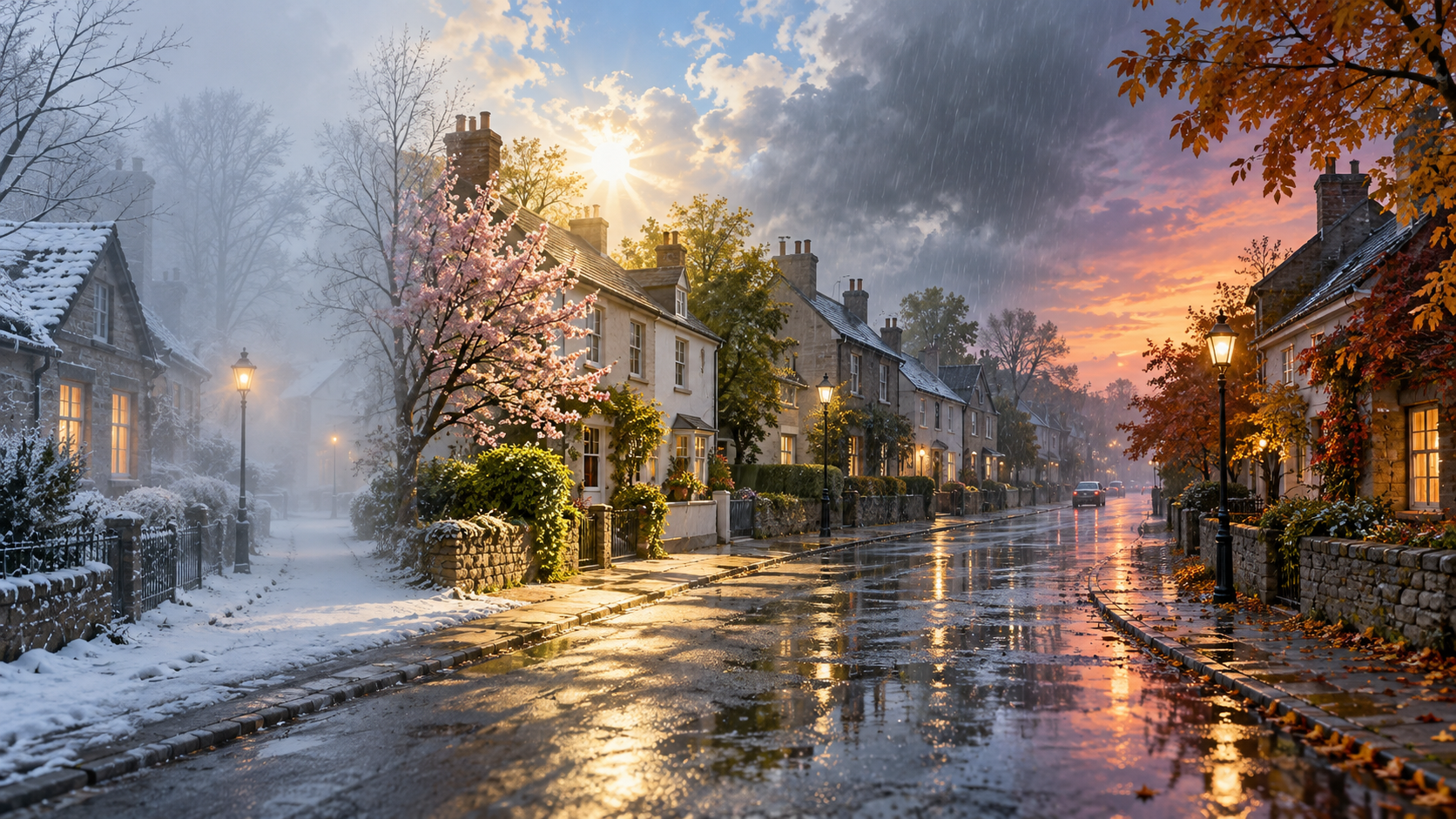
I gave myself one street and four visits. The purpose was to stop blaming repetition for pictures that felt repetitive.
On the first visit, mist softened the far end of the road. I stayed with broad shapes because the little details kept disappearing. A familiar view felt unusually unfinished, as though the street were still deciding how much of itself to reveal.
The second visit was bright. Every pale surface competed for attention, and the shadows drew hard lines through places I had previously treated as gentle backgrounds. I needed a more deliberate frame. The light was not better simply because there was more of it.
Rain supplied the third visit. Reflections repeated windows in the pavement and changed the apparent balance of the picture. I watched from a place where I could keep dry without blocking anyone's passage. A wall that usually occupied the background became the main subject when its reflection entered the foreground.
At dusk, the street felt less like a collection of buildings and more like intervals between small pools of light. The fourth set of pictures required another sort of patience. I made fewer frames and paid closer attention to what remained legible.
Back at the desk, I resisted arranging the photographs as a contest. Which day won? It was the least interesting question. Each day had offered a different structure and required a different decision.
The exercise has not made me stop wanting to travel. It has made the local walks feel less like waiting for travel to begin.
A familiar street can change without becoming a different street. I can change what I notice without pretending I have discovered an entirely new world.
A thought worth keeping?